I remember a time when I proudly designed my brand’s color palette, confident that my choices reflected my values and personality. But soon, I started noticing a strange pattern—fewer inquiries, lower engagement, and a lingering suspicion that something was off. One day, a potential client mentioned that my website’s colors felt “too harsh” and “unwelcoming,” and it hit me: my brand colors might be doing more harm than good. That was my lightbulb moment, and let’s just say it wasn’t pleasant to realize that what I thought was an authentic reflection was actually scaring away the very leads I wanted to attract.
Why Brand Colors Matter More Than You Think
Colors aren’t just aesthetic choices; they are powerful psychological signals that influence perceptions and actions. According to a study published in the
Frontiers in Psychology, color can increase brand recognition by up to 80%. Yet, many businesses overlook the subtle ways their color schemes impact trust, credibility, and even conversion rates. If your brand palette is at odds with your target audience’s expectations or cultural associations, it could be unintentionally alienating potential leads before they even read your value proposition.
Here’s the truth: a misaligned color choice can evoke feelings of discomfort, skepticism, or boredom—emotions that act as barriers to engagement. Have you ever wondered why some websites just feel off? Or why your favorite brands seem to ‘know’ what colors resonate with you? The answer lies in the psychology behind colors and how they communicate on a subconscious level. And trust me, I learned this the hard way — by making early mistakes in my own branding that cost me valuable leads.
In the sections ahead, I’ll guide you through identifying if your colors are working against you and share practical steps to align your palette with your audience’s expectations—all backed by real-world experience and the latest branding insights. Ready to decode your brand’s color signals and turn strangers into loyal customers? Let’s dive in.
Is Changing Your Brand Colors Really Necessary? Think Twice Before Skipping This Step
I admit, I hesitated at first. Changing a brand’s look feels risky, but clinging to misguided colors can be even more costly. I initially discounted the impact of my color choices because I thought I was being ‘authentic.’ Turns out, I was just naive. If you’ve ever doubted whether your color scheme could be sabotaging your efforts, you’re not alone. But here’s the thing: a strategic refresh can reignite your brand’s appeal and authenticity. Want to explore how to get it right? Check out effective branding tips for more insights—or reach out through our contact page and let’s talk about how to bring your brand colors back into alignment with your goals.
Analyze Your Audience’s Color Preferences
Start by researching your target demographic’s cultural background, age group, and industry norms. Use tools like Google Trends or social media insights to identify common color preferences within your niche. For example, I once worked with a wellness brand targeting millennials; after analyzing their audience, I discovered their favorite colors leaned toward soft pastels rather than harsh reds. This insight guided a palette refresh that increased engagement.
Audit Existing Brand Colors for Psychological Impact
Evaluate if your current colors evoke the desired emotions. Use online color psychology charts to understand what feelings your palette might trigger. For instance, if your brand aims to foster trust but uses overly vibrant or aggressive hues, it can send conflicting signals. An honest audit reveals misalignments, prompting necessary adjustments.
Create a Color Palette That Reflects Your Brand Values
Define the personality you want to convey—professional, friendly, innovative—and select colors accordingly. Think of your palette as the clothing your brand wears; every hue should match the message. I recommend using tools like Adobe Color or coolors.co to experiment and develop a cohesive scheme. Remember, consistency across your website, social media, and marketing materials reinforces your brand identity.
Test and Refine Your Colors
Implement your new palette on a test site or a small segment of your audience. Use heatmaps or A/B testing on landing pages to measure user response. In one case, I launched two versions of a landing page with different color schemes; the variation with calmer tones outperformed the bold version in conversions by 15%. Continuous testing allows you to fine-tune your palette for maximum resonance.
Integrate Your Palette Across All Touchpoints
Ensure your new colors appear consistently in your logo, website, emails, and ads. Use style guides to maintain uniformity. Remember, branding isn’t just visuals; it’s the experience and perception you craft through every interaction. Consistent color application boosts recognition and trust, making your brand more memorable and trustworthy.
Stay Updated and Evolve Your Colors
Design trends and audience preferences change. Regularly revisit your palette—quarterly or biannually—and adjust as needed. Keeping your colors fresh and aligned with current perceptions keeps your brand relevant. For example, I recently shifted a client’s palette to incorporate more muted tones reflecting current minimalist trends, resulting in a modernized brand image that appeals to younger audiences.
Remember, your color choices are a dialogue with your audience. By analyzing, testing, and consistently refining your palette, you ensure that your brand signals trustworthiness and appeal—compelling strangers to become loyal customers.
 Many entrepreneurs and marketers believe they have branding and SEO figured out, but in reality, there are subtle nuances and misconceptions that often lead to costly pitfalls. For instance, a prevalent myth is that *more traffic always equals better results*. However, without aligning your visitor’s expectations with your brand message and website design, increased traffic can result in higher bounce rates and lower conversions. This misconception can cause businesses to focus solely on driving visitors rather than attracting the right audience, ultimately wasting resources and time.
Another widespread misunderstanding is that only technical SEO matters, neglecting the importance of user experience and branding signals. While tools like technical SEO are vital, ignoring aesthetic consistency, brand voice, and storytelling diminishes your site’s ability to foster trust and foster loyalty. An overemphasis on keywords and backlinks, without considering the broader context, can lead to penalties or poor rankings according to SEO experts.
Are Dazzling Visuals Enough to Compensate for Weak Content?
Many believe that a stunning website design can carry a brand alone, but the reality is quite different. Visual appeal grabs attention initially, but without meaningful, audience-centric content, visitors won’t stay or convert. Incorporating strong messaging aligned with your brand values is crucial, and this requires understanding your target audience’s psychographics. Remember, Google also evaluates user engagement signals — like dwell time and click-through rates — to rank your pages, as explained in advanced SEO-guides.
Beware of the trap that many overlook: neglecting mobile optimization. A site might look spectacular on desktop, but if it doesn’t adapt seamlessly to mobile devices, you risk losing visibility and conversions. According to recent studies, over 60% of searches originate from mobile, emphasizing the importance of responsive design and fast-loading pages. For ideas on staying ahead, check out web design trends for 2025.
Building a consistent brand identity across all platforms enhances recognition and trust, which are critical psychological signals for consumers. Misaligned messaging or inconsistent visuals can confuse visitors and diminish authority. Focus on cohesive branding strategies as outlined in brand development guides.
Remember, in the complex world of digital marketing, superficial tactics won’t produce sustained success. Digging into these nuances helps prevent common pitfalls and establishes a solid foundation for growth. Have you ever fallen into this trap? Let me know in the comments.
Keep It Running: Essential Tools and Techniques
Maintaining a robust online presence requires more than just setting up your website and running occasional campaigns. It demands continuous optimization, monitoring, and adaptation. To achieve this, I rely on a combination of specialized tools and a disciplined approach. For instance, I use Screaming Frog SEO Spider for regular site audits—it’s invaluable for identifying crawl errors, broken links, or duplicate content that might hinder your technical SEO. This tool allows me to run comprehensive audits without heavy resource drain, ensuring my site stays healthy over time.
Automation plays a significant role as well. I recommend harnessing Google Tag Manager to manage analytics and conversion tracking effortlessly. It reduces reliance on developers and accelerates troubleshooting, especially when implementing or updating tags across your site. Pair that with Google Search Console for ongoing performance monitoring; it provides critical insights into indexing issues, mobile usability, and keyword performance. Regularly reviewing your Search Console data helps preempt drop-offs in search rankings caused by unseen issues.
When it comes to PPC campaigns, I use Microsoft Advertising Editor for efficient management of large ad accounts. Its offline editing capabilities save time and ease the process of refining ad copy and keywords, which is vital for maintaining ROI as market conditions evolve.
On the content side, Grammarly Business ensures your website copy is polished and aligns with your brand voice, which is crucial for long-term branding consistency. After all, a coherent tone builds trust and authority, reinforcing your brand identity across all channels as outlined here.
Looking ahead, I anticipate a greater emphasis on AI-driven optimization tools that can predict performance trends and suggest actions before issues arise. Staying ahead of these trends means adopting tools that can integrate seamlessly with existing platforms, providing proactive insights rather than reactive fixes. For example, emerging AI platforms like MarketMuse offer content optimization suggestions that align with your SEO and branding goals, saving time and boosting effectiveness.
How do I maintain my website’s performance over time?
Consistency is key. Regularly schedule audits with tools like Screaming Frog, keep your analytics updated with Google Tag Manager, and stay informed about new automation solutions. Also, dedicate time to reviewing your technical SEO health—errors like broken URLs, duplicate titles, or slow-loading images can silently hurt your rankings. By systematically applying these best practices, you’ll ensure your digital presence remains resilient and responsive to change. Want to get started? Try setting a bi-weekly audit routine with Screaming Frog or similar tools to catch issues early and keep your site as optimized as possible.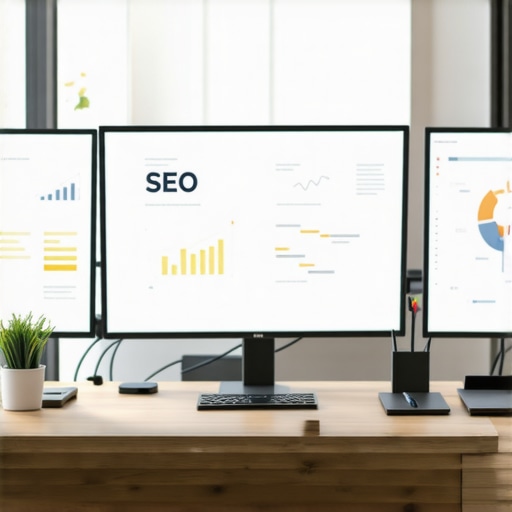
Image prompt: A modern workspace with multiple screens displaying website analytics, SEO tools, and a content calendar, illustrating ongoing website maintenance. Alt: Modern workspace with digital tools for website management. Title: Continuous Website Maintenance and Optimization.
Lessons That Took Me Too Long to Learn
One of my biggest realizations came from mistakenly believing that my brand’s colors alone could speak for me. It took frustrating client feedback and honest self-reflection to see how a mismatched palette was silently turning prospects away. I learned that authentic branding isn’t just about choosing pretty colors but about aligning every visual and message with your audience’s subconscious expectations.
Another hard lesson was realizing that no matter how beautiful your website looks, if your content isn’t compelling or SEO-optimized, your traffic is just vanity metrics. Diving into technical SEO and user experience revealed how integrated design and strategy truly are—missing one side can undermine the other. It’s a reminder that evolution in branding means continuous learning and adaptation.
And perhaps most unexpectedly, I discovered that rapid changes—whether redesigns or marketing tactics—must be deliberate and tested. Rushing to stay trendy or outpace competitors without understanding your audience’s preferences can backfire. Patience and ongoing analysis are essential for meaningful growth in branding and digital presence.
The Tools That Changed My Approach to Branding and SEO
For managing SEO health and technical issues, Screaming Frog SEO Spider became my go-to. It uncovered crawl errors and content duplications that silently hurt my rankings, saving me time and headaches. When refining visual branding, Coolors.co helped me craft palettes that resonate emotionally, ensuring consistency across all touchpoints.
To test strategies before full deployment, A/B testing on landing pages using PPC platforms provided insights into what truly moves the needle. Meanwhile, future-proof web design trends inspired me to stay ahead in user experience design, reflecting evolving audience preferences.
Embracing these tools and insights helped me develop a more strategic, authentic approach—one that balances aesthetic appeal, technical robustness, and audience psychology. My advice is to find your set of reliable resources and keep refining your toolkit, as continuous improvement fuels sustainable growth.
Embrace Your Unique Voice and Make Bold Moves
The most vital message I can share is this: Your brand’s success hinges on authenticity and bravery. Don’t shy away from revisiting your colors, content, or strategies just because they worked once. Trends shift, perceptions change, and your audience’s expectations evolve. Be willing to experiment, test, and listen.
Take action today—review your current branding elements, analyze your audience’s preferences, and set a plan to improve. Your brand’s future isn’t written in the stars; it’s shaped by your willingness to adapt and grow. Remember, the most compelling brands are those that stay true to their core while daring to evolve.
What’s one part of your branding or SEO you’re eager to revisit or improve? Share your thoughts below—I’d love to hear your story!
,