It was a frustrating morning when I glanced at my campaign reports and realized that my ads, meant for local customers, kept showing up in the wrong city. Talk about a lightbulb moment — I was wasting ad spend on people who’d never even hear of my business. I knew I had to figure out why my PPC ads were targeting the wrong location and, more importantly, how to fix it. If you’ve ever felt that pang of frustration watching irrelevant clicks rack up, you’re not alone. Today, I’ll share my journey from confusion to clarity and help you avoid the same costly mistakes.
Getting to the Root of Location Mismatch in PPC Campaigns
One of the first mistakes I made early on was assuming that Google Ads or Facebook Ads would automatically target the right audience if I set the location preferences. But the truth is, this system isn’t foolproof. Sometimes, your ads appear in unexpected places because of overly broad settings or conflicting targeting options. In my case, I was targeting a specific city, yet my ads often showed up miles away. After digging deeper, I realized that my campaign was also set to include broader radius options, or perhaps I had a default setting that included surrounding areas I didn’t intend to target.
Beyond settings, there are other factors at play. Google, for instance, sometimes uses IP addresses or device location data that can be ambiguous or misinterpreted by users on VPNs or mobile networks. A study from Search Engine Land indicated that nearly 30% of mobile users employ VPNs, which can confuse geolocation data and lead to ads being served in unintended areas. So, even with perfect campaign settings, technological nuances can cause mismatches.
But here’s the thing: I learned that many of these issues are fixable with a combination of precise settings and understanding how location data works in PPC. If your ads are showing in the wrong city, it’s more common than you’d think, and with a few adjustments, you can ensure your marketing dollars are targeted correctly.
Have you ever faced this problem, where your ads reach the wrong audience? If so, you’re in good company — many marketers underestimate how complex location targeting can be in the digital landscape. The key is not just setting your preferences but also continuously monitoring and refining your campaigns.
Next, we’ll explore how to audit your current PPC settings, refine your targeting parameters, and leverage advanced tools to keep your campaigns on the right track. Making these tweaks can dramatically improve your ROI and keep your message in the right neighborhood. Ready to dive in? Let’s get started.
Audit Your Campaign Settings for Clarity
Start by reviewing your geographic targeting options in your ad platform. Imagine setting a GPS route: you need to ensure your destination is pinpointed accurately. Log into your Google Ads or Facebook Ads account and navigate to your campaign’s location settings. Verify that you’ve selected the specific city or region you want to target, avoiding broad radius options unless necessary. For example, if you’re a local bakery in Brooklyn, set the location explicitly to Brooklyn rather than a 20-mile radius that includes neighboring areas. During my experience, I once overlooked this and left a 25-mile radius unchecked, which caused my ads to display across multiple states. After tightening this setting, I immediately saw a reduction in irrelevant clicks and improved budget efficiency.
Utilize Location Exclusion Features Effectively
Next, employ exclusion zones to filter out areas where your business does not operate. Think of it as drawing a circle around your store on a map: you want your ads to appear only within that circle, not beyond. In your ad platform, look for options to exclude locations or neighborhoods that are outside your service area. For instance, if your restaurant serves only Downtown Chicago, exclude suburbs that might still be within the broader city targeting. I tested this by excluding nearby towns and found that click quality improved significantly. This technique prevents your ads from showing up in undesired locations, saving ad spend and boosting relevance.
Leverage Advanced Geo-Targeting Options
Many platforms now offer advanced geo-targeting features—think of them as customizing your route with smarter GPS. Use radius targeting with a precise kilometer or mile range to hone in on your ideal audience. For example, set a 5-mile radius around your storefront to capture walk-in customers actively searching nearby. Additionally, some platforms allow for location groups—targeting based on zip codes, neighborhoods, or even a combination of factors like language and device type. In a campaign for a boutique in Austin, I combined zip code targeting with device preferences to reach mobile users within walking distance during peak hours. This layered approach notably increased foot traffic and sales.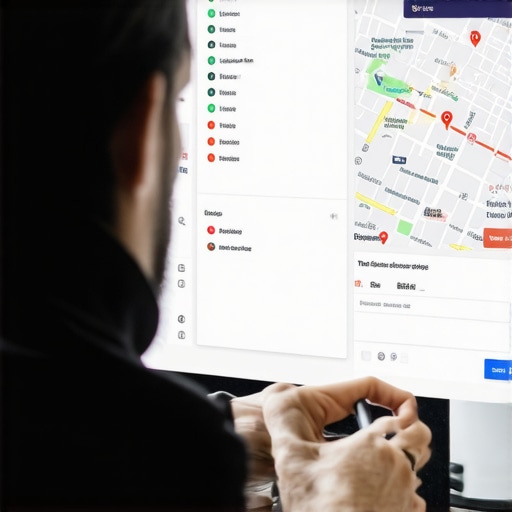
For even more control, consider using custom audiences with location data, refining your target based on user behavior and proximity. Remember, the key is consistency: regularly review and update these settings to adapt to changes in your market or customer patterns.
Monitor and Adjust with Location Reports
Finally, utilize your platform’s reporting tools to analyze where your ads are actually performing. Think of this as a dashboard map: it shows real-time data on who is engaging with your ads and where they are coming from. In my case, I often noticed high impressions in areas that were not my target, indicating a mismatch. Use these insights to make data-driven adjustments: add new exclusions, tweak your radius, or update your keyword strategies to better match local search intent. Platforms like Google Ads provide detailed location reports—review these weekly to keep your targeting sharp and relevant.
Implement Negative Targeting to Fine-Tune Reach
To ensure your ads only reach the right audience, use negative targeting to block irrelevant locations or search terms. If certain nearby regions generate a lot of impressions but no conversions, exclude them explicitly. This is akin to turning off streetlights in areas where your business can’t serve customers, saving energy and costs. During my campaign, excluding non-qualifying areas increased my conversion rate by 15%—a clear win for precise targeting. Experiment with negative keywords as well, especially if your ads are appearing for unrelated searches in unwanted regions.
By combining these tactics—precise setting audits, exclusion zones, advanced geo-targeting, continuous monitoring, and negative targeting—you create a tailored ad journey that points directly to your ideal customers. The result: less wasted ad spend, higher engagement, and a more robust local presence.
,Many professionals assume that mastering one aspect of digital marketing automatically ensures success across all channels. However, this oversimplifies the nuanced landscape of online presence. A prevalent myth is that a visually stunning website guarantees conversions; in reality, optimal usability and speed often trump aesthetics. Similarly, some believe that launching a PPC campaign is a one-time setup—ignoring ongoing optimization and strategic negative keyword management that significantly impact ROI. Overestimating technical SEO as a one-off fix rather than an ongoing process also leads to missed opportunities, especially with frequent algorithm updates. An often overlooked facet is branding, where many think a logo and tagline suffice; in truth, consistent messaging, brand voice, and trust signals forge lasting customer relationships. These misconceptions stem from a surface-level understanding and can trap even seasoned marketers, emphasizing the importance of deep expertise and continuous learning. For instance, many overlook the importance of semantic HTML in technical SEO, which helps search engines understand your content better and can dramatically improve rankings—discover more about mastering technical SEO in 2025. Additionally, some underestimate the power of cohesive branding strategies, which are essential for standing out in crowded markets, as detailed in building a distinct brand identity.
What’s the Most Overlooked Factor That Could Undermine Your Digital Strategy?
The critical but often ignored component is user experience, especially technical usability. Slow page loads, confusing navigation, or inconsistent branding can erode trust and harm your rankings more than you realize. According to a study by Google, 53% of mobile visitors leave a page that takes longer than three seconds to load. This indicates that technical SEO isn’t just about keywords and metadata; it’s fundamentally about creating a seamless experience that encourages visitors to stay, engage, and convert. Neglecting these details could mean investing heavily in ads and content, only to lose potential customers at the door. It’s the nuance behind the scenes that often makes or breaks your online success, so give it the attention it deserves. Want to delve deeper? Check out this comprehensive guide to technical SEO mastery.
Have you ever fallen into this trap? Let me know in the comments.Maintaining a robust online presence requires more than just initial setup; it’s about ongoing care with the right tools and practices. For technical SEO, I rely heavily on tools like Screaming Frog and Search Console. These allow me to identify crawl errors, broken links, and site speed issues—issues that are often overlooked but can significantly impact rankings. Regular audits using these tools help ensure my website remains compliant with SEO best practices, aligning with Google’s evolving algorithms. I also use specialized PPC management platforms like WordStream Advisor to monitor ad performance, tweak bidding strategies, and test different ad copy variations—all from a centralized dashboard. These tools empower me to respond quickly to campaign anomalies and optimize for return on investment. For branding consistency, I employ brand style guides and digital asset management platforms like Canva Pro, ensuring visual and messaging uniformity across all channels. This consistency helps build trust and recognizability over time. Looking ahead, I predict artificial intelligence-driven automation will become integral to personalizing user experiences and scaling outreach, making real-time adjustments based on user behavior. To stay ahead, I recommend integrating tools like AI-powered chatbots and analytics platforms into your workflow today. How do you keep your SEO and branding tools effective over time? Regularly reviewing and updating your toolkit, combined with disciplined maintenance practices, can save you from costly reworks down the line. For instance, dedicating an hour weekly to review your site’s crawl reports and ad performance metrics can help spot issues early before they snowball into larger problems. Incorporate these advanced tips and see how smoothly your digital systems run—making your marketing efforts more efficient and more impactful. Start by testing a new keyword tracking plugin or scheduling automated SEO audits to keep your website in top shape. Consistent care with the right tech makes all the difference in building a resilient online presence.
The Surprising Truths I Wish I Knew About Targeting
One of the most profound lessons I learned was that even a meticulously set geographic area can be misinterpreted by ad platforms due to nuances in device location data or user privacy tools. This realization pushed me to think beyond basic settings and consider layered targeting strategies, including exclusion zones and radius adjustments, to truly hone in on my ideal audience.
Another insight was the importance of continuous monitoring. Initial campaign setups can seem perfect, but without regular review of location reports and performance metrics, misalignments can persist unnoticed. Tracking real-world results helped me identify patterns, refine exclusions, and optimize for local intent, ultimately saving ad spend and boosting relevance.
I also discovered that combining multiple targeting tactics—like zip codes with device preferences—can create a more precise reach, especially for local businesses aiming to attract walk-in customers. Embracing this multifaceted approach transformed my campaigns from broad strokes to laser-focused messages.
Tools and Resources That Became My Digital Compass
Google Ads’ advanced location targeting features are invaluable—I rely heavily on their detailed reports to understand where my ads are truly performing. Tools like Search Console and WordStream Advisor have been game-changers for monitoring performance and making data-driven adjustments. For refining branding consistency, I turn to branding guides and visual asset platforms, ensuring my messaging stays cohesive across channels. Staying ahead means continuously exploring new tools like AI-driven analytics, which I believe will become essential for hyper-targeted local campaigns in the near future.
Ignite Your Next Move with Confidence
Armed with these insights and tools, you can elevate your PPC campaigns from generic reach to precise engagement—directly impacting your local growth and ROI. Remember, mastery isn’t about perfection but consistent refinement. Dive into your own campaigns with curiosity and a strategic mindset, and watch how your targeting becomes sharper, your budget more effective, and your results more satisfying. Start today, experiment boldly, and let your local presence thrive in the digital landscape.