
It was a Tuesday morning, the kind where the coffee tastes better than usual—until I opened the Search Console email. “Manual Action: Unnatural links to your site.” My stomach did a somersault. A client who had trusted me for months, whose entire revenue depended on their organic search visibility, had simply vanished. Not a slight dip in rankings. Total annihilation. I remember pacing my living room, wondering how I’d explain that the budget-friendly link-building tactics we experimented with had backfired so spectacularly. I’d made the classic mistake of valuing quantity over quality, a trap many of us fall into when we’re hungry for quick results. It was a visceral lesson in the fragility of digital authority. I had to sit down and admit to the client that our shortcut was actually a long road to nowhere. But more importantly, I had to find a way to fix it.
Stop Trading Your Site’s Future for Cheap Shortcuts
In the early days of my career, I truly believed that a link was a link. I thought Google was just a machine we could outsmart with enough volume. I was wrong. That manual penalty was a wake-up call that taught me everything about why you need to spot a toxic link before it triggers a ranking drop. A clean backlink profile isn’t just a “nice to have”; it is the literal foundation of your digital existence. When we began the cleanup process for this client, we realized we weren’t just deleting spam; we were surgically removing a digital infection. We had to audit the backlink profile for dangerous PBN links that were disguised as legitimate blogs. According to data from Search Engine Land, Google issues over 4 million manual actions every year, yet most small businesses have no idea they are walking on thin ice until the floor disappears. The stress of watching a business owner’s livelihood evaporate because of a few bad domains is something I wouldn’t wish on my worst competitor. It forces you to rethink your entire approach to growth.
Is a manual penalty basically a permanent death sentence?
It certainly feels that way when your traffic hits zero, but I’m here to tell you it’s not. The problem is that most people panic and start disavowing everything in sight, which often does more harm than good. You need a scalpel, not a chainsaw. We learned that the hard way by accidentally removing some of the client’s best organic mentions during our first frantic attempt at a fix. Today, I want to walk you through the exact framework we used to restore their reputation and eventually build a backlink profile that looks natural to the algorithm. We transitioned from shady tactics to the kind of link building move that actually moves the needle without keeping you up at night. Have you ever logged in to see your hard-earned rankings suddenly replaced by a warning message from Google? It’s a gut-wrenching experience, but you don’t have to stay in the doghouse forever. We are going to dive into the messy, tedious, but ultimately rewarding process of earning back Google’s trust.
Gather Every Single Link Before You Start Slashing
The first mistake people make when a manual action hits is relying on just one tool. If you only look at Search Console, you’re seeing the tip of the iceberg. I learned this the hard way with a client in the automotive niche; we thought we had cleaned up everything, but a hidden cluster of links from a defunct directory network kept our reconsideration request from being approved. You need to export data from every source possible. Think of your backlink profile like a crime scene—you need to collect every fiber of evidence. Once you have your massive spreadsheet, it’s time to merge the data and remove duplicates. This isn’t just about SEO; it’s about having a complete map of your site’s digital footprint so you don’t leave any toxic breadcrumbs behind.
Treat Your Backlink Profile Like a Crime Scene
Once you have the data, the real work begins. You have to categorize links into three buckets: the good, the bad, and the ugly. The ‘good’ are the editorial mentions you earned naturally. The ‘bad’ are the low-quality directories. The ‘ugly’ are the paid PBNs or hacked links that likely triggered the penalty. I remember spending eighteen hours straight once, manually checking URLs for a tech blog because their ‘automated’ tool gave a clean bill of health to a site that was clearly a link farm. Automated scores are just a suggestion; your human eyes are the only thing Google really trusts during a manual review. You are looking for patterns—identical anchor text, the same IP addresses, or sites that look like they were built in 1998 and never updated. 
The Moment I Realized Automated Tools Can’t Think
During that eighteen-hour marathon, I found a link from a major industry publication that a popular SEO tool flagged as ‘toxic’ simply because the site had a low traffic score that month. If I had blindly followed the tool, I would have disavowed one of the client’s most valuable assets. This is why you must master technical SEO in 2025 by understanding the difference between a site that is temporarily struggling and one that is fundamentally malicious. You have to look at the ‘intent’ of the link. Was it placed to help a user find something, or was it placed to trick a robot? If it’s the latter, it has to go.
Stop Internal Authority Leaks Before They Sink You
While you are cleaning up external links, don’t ignore what’s happening inside your own walls. A manual penalty often shines a spotlight on other technical weaknesses. For example, we often find that sites under review also suffer from massive internal redirect chains draining authority. If your site structure is a mess, Googlebot is already frustrated before it even looks at your backlinks. I’ve seen cases where we fixed the backlink profile, but the site still didn’t bounce back until we performed a server log analysis that exposed indexing issues we didn’t even know existed. You have to show Google that you are a responsible webmaster across the board. This includes using aggressive measures like knowing how to use 410 gone tags to clean up your index fast if you have thousands of low-quality thin pages that were generated by a previous hack or a poor SEO strategy. Cleaning the outside is useless if the inside is still rotting. Once your house is in order, you can finally implement the internal linking strategy that revived our old posts to signal to Google that your remaining content is high-value and deserves to be seen again.
Most Speed Scores are Lying to You
Let’s dig deeper into the reality of site performance. Most people think technical SEO is a simple checklist of green lights in a Chrome extension. I’ve seen sites with a perfect 100/100 mobile score that couldn’t rank for their own brand name. Everyone says speed is the ultimate factor, but in my experience, interaction readiness is what actually keeps a user from bouncing. You can have a fast-loading page, but if the ‘main thread’ is busy processing heavy scripts, the user’s first click will feel dead. This is a massive ‘Oops’ factor that most gurus miss. I once worked with a SaaS provider who spent thousands on a developer to minify every file, yet their site felt sluggish because they didn’t know how to stop your css files from blocking the main thread. They were chasing the wrong ghost, focusing on total file size rather than the execution order of the code. 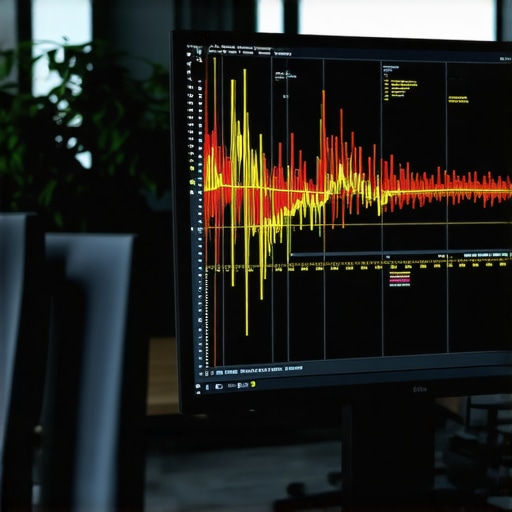
Why does my site feel fast but still fail Core Web Vitals?
It’s the difference between Lab Data and Field Data. Lab data is a simulation on a high-speed connection; Field data is the messy reality of your actual users. According to the 2024 Web Almanac by HTTP Archive, over 40% of sites fail the ‘Interaction to Next Paint’ (INP) metric despite having ‘passing’ load times in simulated environments. This is where you need to be careful: you aren’t optimizing for a bot; you’re optimizing for a human on a three-year-old smartphone with a spotty 4G connection. If you don’t account for why your static assets are slowing down googlebot and your customers, you are just painting a house that has a crumbling foundation. Have you ever fallen into the trap of chasing a 100/100 PageSpeed score only to see zero rank improvement? Let me know in the comments.
Your Ad Spend is Leaking and the AI Won’t Tell You
This same logic of ‘surface-level success’ applies to your paid traffic. We often see brands dump thousands into Google Ads, assuming the ‘Smart’ algorithms will handle the heavy lifting. However, why manual bidding outperformed our automated campaigns became a recurring theme for us last year in highly competitive niches. The ‘set it and forget it’ mindset is a trap that drains your ROI. If you aren’t actively searching for the ppc budget leak you can fix in ten minutes, you’re essentially subsidizing Google’s quarterly earnings with your wasted spend. Beyond just the ads, we also found that technical hiccups like the response delays that turn your mdr provider into a liability can impact how Google perceives your site’s reliability during high-traffic windows. You have to mastering technical seo in 2025 by looking beyond the surface metrics and understanding the intent behind every millisecond of load time.Once you’ve plugged the leaks and the manual action is a distant, albeit painful, memory, you reach the most dangerous phase: complacency. It is easy to be vigilant when your house is on fire, but the real pros are the ones who keep checking the smoke detectors when everything seems fine. Scaling a business isn’t about doing more things; it’s about doing the right things with clinical precision. For me, that meant moving away from ‘hope-based’ marketing and into a rigorous maintenance schedule. I stopped looking at SEO as a project and started treating it as a core utility, like electricity or water. If you want to master technical SEO from crawlability to site speed optimization, you have to accept that your site is a living organism that naturally tends toward chaos. Links break, scripts update and conflict, and Google changes the rules while you’re sleeping.
My Toolkit for Staying Out of the Doghouse
People always ask me which shiny new AI tool I’m using, but the truth is my ‘war room’ relies on some very old-school reliability. I live in Screaming Frog. Not just for quick audits, but for scheduled crawls that alert me the second a developer accidentally pushes a ‘noindex’ tag to production. I’ve seen six-figure launches ruined by a single checkbox. To supplement that, I use a combination of Ahrefs for monitoring the health of our mentions and Microsoft Clarity to actually see where users are getting stuck. This is how you unlock technical SEO secrets to boost your website—by watching how real humans interact with your code. If I see a cluster of ‘rage clicks’ on a mobile menu, I don’t care what the PageSpeed score says; that menu is broken. We also lean heavily on the gmb ranking software tactics that actually help your business profile move up the map pack because local visibility is often more volatile than global rankings. 
How do I keep the momentum going without burning out?
The secret is automation for the mundane and manual oversight for the creative. I set up custom alerts in Google Search Console so I’m notified immediately of any new schema errors blocking your rich snippets. You shouldn’t be looking for these problems manually every day. Instead, use that mental energy to refine your message. As your site grows, your brand identity becomes your biggest shield against algorithm shifts. If people are searching for your brand name specifically, Google is much less likely to bury you. This is why branding mastery and building a distinct identity in a crowded market is actually a technical SEO strategy in disguise. In the future, I predict that ‘Search Generative Experience’ (SGE) will make traditional blue links less relevant, and the only way to survive is to be the definitive, cited source that the AI can’t ignore. You need to ensure you are maximizing ROI this year by diversifying your traffic so you aren’t a hostage to any single platform. According to Google’s Search Quality Rater Guidelines, the concept of E-E-A-T is only becoming more granular, meaning your ‘About’ page and author bios are now as important as your load time. Don’t just build a site; build a legacy. I challenge you to go into your Search Console today and find one ‘Valid with Warnings’ error you’ve been ignoring and fix it—that one small move is where long-term growth begins.It was a Tuesday morning, the kind where the coffee tastes better than usual—until I opened the Search Console email. “Manual Action: Unnatural links to your site.” My stomach did a somersault. A client who had trusted me for months, whose entire revenue depended on their organic search visibility, had simply vanished. Not a slight dip in rankings. Total annihilation. I remember pacing my living room, wondering how I’d explain that the budget-friendly link-building tactics we experimented with had backfired so spectacularly. It was a visceral lesson in the fragility of digital authority. I had to sit down and admit to the client that our shortcut was actually a long road to nowhere. But more importantly, I had to find a way to fix it.
Stop Trading Your Site’s Future for Cheap Shortcuts
In the early days of my career, I truly believed that a link was a link. I thought Google was just a machine we could outsmart with enough volume. I was wrong. That manual penalty was a wake-up call that taught me everything about why you need to spot a toxic link before it triggers a ranking drop. A clean backlink profile isn’t just a “nice to have”; it is the literal foundation of your digital existence. When we began the cleanup process for this client, we realized we weren’t just deleting spam; we were surgically removing a digital infection. We had to audit the backlink profile for dangerous PBN links that were disguised as legitimate blogs. According to data from Search Engine Land, Google issues over 4 million manual actions every year, yet most small businesses have no idea they are walking on thin ice until the floor disappears. The stress of watching a business owner’s livelihood evaporate because of a few bad domains is something I wouldn’t wish on my worst competitor. It forces you to rethink your entire approach to growth.
Is a manual penalty basically a permanent death sentence?
It certainly feels that way when your traffic hits zero, but I’m here to tell you it’s not. The problem is that most people panic and start disavowing everything in sight, which often does more harm than good. You need a scalpel, not a chainsaw. We learned that the hard way by accidentally removing some of the client’s best organic mentions during our first frantic attempt at a fix. Today, I want to walk you through the exact framework we used to restore their reputation and eventually build a backlink profile that looks natural to the algorithm. We transitioned from shady tactics to the kind of link building move that actually moves the needle without keeping you up at night. Have you ever logged in to see your hard-earned rankings suddenly replaced by a warning message from Google? It’s a gut-wrenching experience, but you don’t have to stay in the doghouse forever. We are going to dive into the messy, tedious, but ultimately rewarding process of earning back Google’s trust.
Gather Every Single Link Before You Start Slashing
The first mistake people make when a manual action hits is relying on just one tool. If you only look at Search Console, you’re seeing the tip of the iceberg. I learned this the hard way with a client in the automotive niche; we thought we had cleaned up everything, but a hidden cluster of links from a defunct directory network kept our reconsideration request from being approved. You need to export data from every source possible. Think of your backlink profile like a crime scene—you need to collect every fiber of evidence. Once you have your massive spreadsheet, it’s time to merge the data and remove duplicates. This isn’t just about SEO; it’s about having a complete map of your site’s digital footprint so you don’t leave any toxic breadcrumbs behind.
Treat Your Backlink Profile Like a Crime Scene
Once you have the data, the real work begins. You have to categorize links into three buckets: the good, the bad, and the ugly. The ‘good’ are the editorial mentions you earned naturally. The ‘bad’ are the low-quality directories. The ‘ugly’ are the paid PBNs or hacked links that likely triggered the penalty. I remember spending eighteen hours straight once, manually checking URLs for a tech blog because their ‘automated’ tool gave a clean bill of health to a site that was clearly a link farm. Automated scores are just a suggestion; your human eyes are the only thing Google really trusts during a manual review. You are looking for patterns—identical anchor text, the same IP addresses, or sites that look like they were built in 1998 and never updated. #IMAGE_PLACE_HOLDER_B#
The Moment I Realized Automated Tools Can’t Think
During that eighteen-hour marathon, I found a link from a major industry publication that a popular SEO tool flagged as ‘toxic’ simply because the site had a low traffic score that month. If I had blindly followed the tool, I would have disavowed one of the client’s most valuable assets. This is why you must master technical SEO in 2025 by understanding the difference between a site that is temporarily struggling and one that is fundamentally malicious. You have to look at the ‘intent’ of the link. Was it placed to help a user find something, or was it placed to trick a robot? If it’s the latter, it has to go.
Stop Internal Authority Leaks Before They Sink You
While you are cleaning up external links, don’t ignore what’s happening inside your own walls. A manual penalty often shines a spotlight on other technical weaknesses. For example, we often find that sites under review also suffer from massive internal redirect chains draining authority. If your site structure is a mess, Googlebot is already frustrated before it even looks at your backlinks. I’ve seen cases where we fixed the backlink profile, but the site still didn’t bounce back until we performed a server log analysis that exposed indexing issues we didn’t even know existed. You have to show Google that you are a responsible webmaster across the board. This includes using aggressive measures like knowing how to use 410 gone tags to clean up your index fast if you have thousands of low-quality thin pages that were generated by a previous hack or a poor SEO strategy. Cleaning the outside is useless if the inside is still rotting. Once your house is in order, you can finally implement the internal linking strategy that revived our old posts to signal to Google that your remaining content is high-value and deserves to be seen again.
Most Speed Scores are Lying to You
Let’s dig deeper into the reality of site performance. Most people think technical SEO is a simple checklist of green lights in a Chrome extension. I’ve seen sites with a perfect 100/100 mobile score that couldn’t rank for their own brand name. Everyone says speed is the ultimate factor, but in my experience, interaction readiness is what actually keeps a user from bouncing. You can have a fast-loading page, but if the ‘main thread’ is busy processing heavy scripts, the user’s first click will feel dead. This is a massive ‘Oops’ factor that most gurus miss. I once worked with a SaaS provider who spent thousands on a developer to minify every file, yet their site felt sluggish because they didn’t know how to stop your css files from blocking the main thread. They were chasing the wrong ghost, focusing on total file size rather than the execution order of the code. #IMAGE_PLACE_HOLDER_C#
Why does my site feel fast but still fail Core Web Vitals?
It’s the difference between Lab Data and Field Data. Lab data is a simulation on a high-speed connection; Field data is the messy reality of your actual users. According to the 2024 Web Almanac by HTTP Archive, over 40% of sites fail the ‘Interaction to Next Paint’ (INP) metric despite having ‘passing’ load times in simulated environments. This is where you need to be careful: you aren’t optimizing for a bot; you’re optimizing for a human on a three-year-old smartphone with a spotty 4G connection. If you don’t account for why your static assets are slowing down googlebot and your customers, you are just painting a house that has a crumbling foundation. Have you ever fallen into the trap of chasing a 100/100 PageSpeed score only to see zero rank improvement? Let me know in the comments.
Your Ad Spend is Leaking and the AI Won’t Tell You
This same logic of ‘surface-level success’ applies to your paid traffic. We often see brands dump thousands into Google Ads, assuming the ‘Smart’ algorithms will handle the heavy lifting. However, why manual bidding outperformed our automated campaigns became a recurring theme for us last year in highly competitive niches. The ‘set it and forget it’ mindset is a trap that drains your ROI. If you aren’t actively searching for the ppc budget leak you can fix in ten minutes, you’re essentially subsidizing Google’s quarterly earnings with your wasted spend. Beyond just the ads, we also found that technical hiccups like the response delays that turn your mdr provider into a liability can impact how Google perceives your site’s reliability during high-traffic windows. You have to mastering technical seo in 2025 by looking beyond the surface metrics and understanding the intent behind every millisecond of load time.Once you’ve plugged the leaks and the manual action is a distant, albeit painful, memory, you reach the most dangerous phase: complacency. It is easy to be vigilant when your house is on fire, but the real pros are the ones who keep checking the smoke detectors when everything seems fine. Scaling a business isn’t about doing more things; it’s about doing the right things with clinical precision. For me, that meant moving away from ‘hope-based’ marketing and into a rigorous maintenance schedule. I stopped looking at SEO as a project and started treating it as a core utility, like electricity or water. If you want to master technical SEO from crawlability to site speed optimization, you have to accept that your site is a living organism that naturally tends toward chaos. Links break, scripts update and conflict, and Google changes the rules while you’re sleeping.
My Toolkit for Staying Out of the Doghouse
People always ask me which shiny new AI tool I’m using, but the truth is my ‘war room’ relies on some very old-school reliability. I live in Screaming Frog. Not just for quick audits, but for scheduled crawls that alert me the second a developer accidentally pushes a ‘noindex’ tag to production. I’ve seen six-figure launches ruined by a single checkbox. To supplement that, I use a combination of Ahrefs for monitoring the health of our mentions and Microsoft Clarity to actually see where users are getting stuck. This is how you unlock technical SEO secrets to boost your website—by watching how real humans interact with your code. If I see a cluster of ‘rage clicks’ on a mobile menu, I don’t care what the PageSpeed score says; that menu is broken. We also lean heavily on the gmb ranking software tactics that actually help your business profile move up the map pack because local visibility is often more volatile than global rankings. #IMAGE_PLACE_HOLDER_D#
How do I keep the momentum going without burning out?
The secret is automation for the mundane and manual oversight for the creative. I set up custom alerts in Google Search Console so I’m notified immediately of any new schema errors blocking your rich snippets. You shouldn’t be looking for these problems manually every day. Instead, use that mental energy to refine your message. As your site grows, your brand identity becomes your biggest shield against algorithm shifts. If people are searching for your brand name specifically, Google is much less likely to bury you. This is why branding mastery and building a distinct identity in a crowded market is actually a technical SEO strategy in disguise. In the future, I predict that ‘Search Generative Experience’ (SGE) will make traditional blue links less relevant, and the only way to survive is to be the definitive, cited source that the AI can’t ignore. You need to ensure you are maximizing ROI this year by diversifying your traffic so you aren’t a hostage to any single platform. According to Google’s Search Quality Rater Guidelines, the concept of E-E-A-T is only becoming more granular, meaning your ‘About’ page and author bios are now as important as your load time. Don’t just build a site; build a legacy. I challenge you to go into your Search Console today and find one ‘Valid with Warnings’ error you’ve been ignoring and fix it—that one small move is where long-term growth begins.
The Hardest Lesson from My Recovery Journey
Looking back at that frantic Tuesday morning, I realize the penalty wasn’t a stroke of bad luck; it was the inevitable result of treating Google like a calculator instead of a community. I learned that digital authority is earned in teaspoons and lost in buckets. If you want to survive long-term, you have to stop looking for the ‘hack’ and start looking for the ‘value.’ This means shifting your mindset from purely transactional links to genuine editorial relationships. Another lightbulb moment was realizing that ‘perfect’ SEO doesn’t exist. You don’t need a site that is 100% flaw-free; you need a site that is consistently better than your competitors and faster to respond to its users. Resilience is built in the boring daily audits, not the flashy yearly overhauls.
My Personal Guardrails for Digital Growth
To stay on the right side of the algorithm, I’ve built a specific routine using a few trusted resources. I don’t just rely on automated reports; I use tools as a starting point for deeper investigation. My ‘holy trinity’ includes Screaming Frog for technical health, Ahrefs for link monitoring, and Microsoft Clarity to understand where users are actually clicking. I also recommend keeping a close eye on your ROI by maximizing ROI this year through diversified traffic sources. If you are just starting to clean up your act, I suggest reading up on branding mastery and building a distinct identity in a crowded market to ensure your site has a ‘soul’ that Google recognizes as high-quality. These aren’t just technical fixes; they are business safeguards.
Turn Your Technical Debt Into a Competitive Edge
Cleaning up a manual action or fixing a broken site structure can feel like a chore, but it is actually your greatest opportunity. While your competitors are busy chasing the next shiny object, you are building a fortress. When you unlock technical SEO secrets to boost your websites google ranking, you aren’t just ticking boxes; you are removing the friction between your business and your customers. The future of search belongs to those who prioritize the human experience. Don’t let the fear of a technical error stop you from growing. Take that first step, fix that one lingering redirect chain, and show the world that your brand is here to stay. #IMAGE_PLACE_HOLDER_E# Have you ever felt like you were doing everything right only to see your traffic drop without warning? Let me know in the comments below.