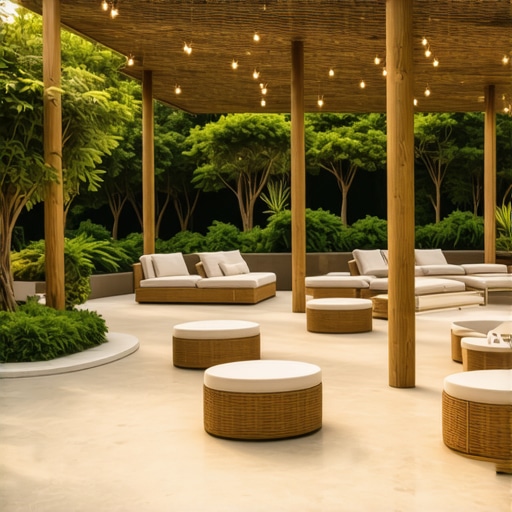
Why Your Online Deck Designer Branding Feels Generic to High-End Clients
In the modern digital landscape, the barrier to entry for design services has never been lower. With a few clicks, anyone can access a “free” tool that promises to render a backyard oasis in minutes. However, for the professional landscape architect or the specialized design firm, this democratization has created a “Commodity Trap.” While platforms like Trex or Decks.com provide excellent utility for the DIY enthusiast, they have inadvertently conditioned the market to expect design to be “free and fast.”
High-end clients – those looking to invest six or seven figures into their outdoor living spaces – do not want “free and fast.” They are looking for “bespoke and expert.” As someone who has designed over 300 installed residential landscapes, specializing in site planning, development review, and rigorous design guidelines, I have seen firsthand how a generic digital presence can alienate the very clientele you are trying to attract. If your online deck designer interface looks like a video game from 2010, you aren’t just losing a lead; you are damaging your brand’s perceived authority. To capture the luxury market, you must pivot from being a software provider to being a design authority.
The “Free Tool” Fallacy: Why Accessibility Kills Exclusivity
The proliferation of the “free” online deck designer has created a psychological ceiling for many businesses. These tools are essentially lead-generation engines for material manufacturers. Their goal is to sell lumber, composite decking, and fasteners – not to provide a nuanced architectural solution. When a high-end client visits your website and sees tools that mirror these mass-market offerings, they immediately categorize your service as a commodity.
Luxury is defined by exclusivity and the scarcity of high-level expertise. Research into the luxury sector indicates that approximately 45% of luxury sales are influenced by digital marketing that emphasizes prestige, sophistication, and a high level of personal curation. If your platform feels too accessible – too “easy” – it loses its luster. High-net-worth individuals are accustomed to paying for professional online landscape architecture because they value the intellectual property and the specialized vision of a human expert over an algorithm.
When you position your brand around a “free tool” model, you are competing on price and speed. In the luxury tier, these are secondary concerns. The primary concern is result and identity. To break out of this fallacy, your digital presence must emphasize the complexity of the work and the depth of the planning involved, moving far beyond the “click-and-drag” simplicity of a generic drought tolerant landscape design app.
The Branding Mastery: Building a Distinct Identity in a Crowded Market
To differentiate yourself, you must consider Branding Mastery: Building a Distinct Identity in a Crowded Market. This involves auditing every touchpoint of your digital experience. Does your site feel like a utility, or does it feel like a gallery? Does it speak the language of construction, or the language of lifestyle? High-end clients are looking for a partner who understands the “soul” of their property, not just the dimensions of their deck.
Visual Identity: Moving Beyond Stock 3D Renders
We are currently living in the “Uncanny Valley” of architectural visualization. Most digital designers use the same generic asset libraries – the same low-poly trees, the same flat water textures, and the same poorly lit furniture models. To a sophisticated client, these look cheap. They signal that you are using the same digital landscape design software as everyone else on the first page of Google.
Luxury branding is about selling an “identity.” Your visuals should not just show where the stairs go; they should evoke the feeling of a summer evening or the crispness of a mountain morning. This requires high-fidelity 3D landscape design services that utilize advanced lighting, realistic textures, and site-specific environmental rendering. When a client sees a render that looks like a photograph, the perceived value of the design triples instantly.
Consider The visual cues that make users trust your site instantly. For a high-end landscape firm, these cues include high-resolution imagery, subtle animations, and a minimalist aesthetic that allows the work to speak for itself. If your site is cluttered with “Get a Quote” buttons and flashing “Free Design” banners, you are sending a “budget” signal. A luxury brand uses white space and professional typography to signal that they are a premium entity. The Small Brand Tweak That Made Us Look Twice as Expensive often involves removing the clutter and focusing on one hero image that demonstrates absolute mastery of the craft.
Technical Authority: The Difference Between a “Planner” and a Designer
This is where the distinction between a generic online landscape design company and a veteran professional becomes clear. High-end residential projects rarely involve just a simple deck. They involve complex ranch landscape design, intricate drainage solutions, development reviews, and strict adherence to design guidelines. A generic tool cannot account for the land’s topography, the local soil composition, or the solar orientation of the home.
As an expert who has navigated hundreds of site plans, I can tell you that the “design” is only 20% of the value. The other 80% is the technical viability and the integration of the structure into the existing environment. When you market your online landscape design services, you must highlight this technical authority. Talk about site planning. Talk about the development review process. Explain why a drought tolerant landscape design in the high desert requires a different architectural approach than one in a coastal environment.
A “planner” understands the rules of the land; a “designer” understands the aesthetics. A high-end client needs both. If your branding only focuses on the “pretty pictures,” you aren’t showing the client that you can actually get the project built. You need to demonstrate that you are a master of comprehensive plans that include everything from utility locations to custom lighting schematics. This level of detail is what separates a $5,000 project from a $500,000 project.
The Psychology of the High-End Buyer: Exclusivity vs. Utility
The global luxury market is projected to reach $1.5 trillion by 2025. This growth is driven by a consumer base that values the “careful management of touchpoints.” In other words, every interaction they have with your brand must feel intentional. If your website’s tone of voice is too “helpful” in a subservient way, it can actually backfire. High-end clients don’t want a “yes-man”; they want a consultant who will tell them what works and what doesn’t.
This is a common pitfall: Why Your Brand Tone of Voice Feels Fake to Customers. Many companies try to sound “luxury” by using overly flowery language, but it comes off as insincere. True authority is found in clarity and confidence. Instead of saying, “We can build whatever you want,” a luxury brand says, “We design site-specific architectural interventions that respect the land’s topography and the home’s soul.”
One of my favorite quotes to share with clients is: “A deck isn’t just a platform; it’s a site-specific architectural intervention that must respect the land’s topography and the home’s soul.” This statement immediately shifts the conversation from “how much per square foot” to “how does this enhance my lifestyle.” You are no longer selling a backyard deck construction service; you are selling an architectural legacy. This psychological shift is mandatory if you want to move away from the generic, price-sensitive market.
Scaling to Commercial and Specialized Projects
The branding that attracts a high-end homeowner is the same branding that attracts commercial developers. Often, the individual looking for a luxury ranch design is also the person responsible for a restaurant patio design or a boutique hotel renovation. If your digital presence is locked into the “homeowner DIY” aesthetic, you are closing the door on lucrative commercial contracts.
Transitioning from a homeowner-centric digital landscape design focus to a professional site development focus requires a change in how you present your portfolio. You must show that you understand the scale and the regulatory requirements of commercial work. For instance, a restaurant patio design isn’t just about seating; it’s about flow, ADA compliance, and durability under high traffic. Your branding should reflect that you are a partner in their business success, not just a decorator.
Furthermore, consider The specific site structure that helps backyard deck construction companies win more local leads. For a company scaling into commercial work, the site structure needs to separate residential “lifestyle” content from commercial “technical” content. This allows you to speak to two different audiences without diluting the brand’s authority in either sector.
- Residential Focus: Privacy, aesthetics, family gathering, and environmental harmony.
- Commercial Focus: ROI, durability, code compliance, and brand integration.
- Ranch/Large Scale: Land management, conservation, and long-term site development.
Conclusion: Auditing Your Brand for 2026
As we look toward the future of the industry, the gap between “automated design” and “expert design” will only widen. AI will soon be able to generate basic deck plans for free. If your brand is built on the ability to produce a basic plan, your business model is at risk. To survive and thrive, you must move toward an “expertise-first” brand.
Stop competing on the features of your online deck designer and start competing on the depth of your architectural insight. Audit your website today: Does it look like a tool, or does it look like a firm? Does it promise “fast and easy,” or does it promise “meticulous and enduring”?
Learning How to Create a Visual Identity That Lasts for Decades is the best investment you can make in your business. By moving away from generic 3D renders and “free tool” marketing, you position yourself as a leader in the luxury landscape space. The high-end client is waiting for someone who speaks their language. Make sure your brand is the one doing the talking.
If you are ready to stop being a commodity and start being a destination, it’s time to rethink your digital strategy. Focus on the technical, the architectural, and the exclusive. That is how you win the high-end market in 2026 and beyond.