
I remember the exact moment I realized I was doing it all wrong. I had spent hours tweaking my ad copy, adding clever phrases, and selecting eye-catching images. Yet, my click-through rates were stagnant, and conversions? Nearly non-existent. It felt like shouting into the void—frustrating, disheartening, and downright baffling. That lightbulb moment hit me: I was missing the core of what makes ad copy resonate.
Why Writing Click-Worthy Ad Copy Feels Like Rocket Science
The truth is, many of us get caught up in the latest trends or assume that a catchy headline alone will do the trick. But let’s get real—if your audience isn’t compelled to pause and click, all your efforts go to waste. According to a recent report by WordStream, the average click-through rate across industries hovers around just 1.91%. That’s a sobering statistic that underscores the importance of crafting copy that truly connects. So, what’s the secret? It’s about understanding your audience’s pain points, desires, and fears—and speaking directly to them in a way that feels personal, relevant, and immediate.
Is Your Ad Copy Really Speaking to Your Audience—or Just Talking at Them?
Early in my marketing journey, I made a crucial mistake: I focused too much on my product’s features, rather than on the benefits my audience genuinely cared about. I thought, “If I highlight all the bells and whistles, they’ll be convinced.” Big mistake. Instead, I learned that effective ad copy taps into emotions, offers solutions, and creates a sense of urgency. Want to avoid my early pitfalls? Keep reading—these insights will help you turn your ad copy into a conversion powerhouse and ensure your efforts finally pay off.
Are you tired of pouring your heart into ads that don’t get clicks? If so, you’re not alone. But don’t worry—I’m here to guide you through proven strategies that make your ads irresistible. Ready to see real results? Let’s dive into what really works in creating ad copy that gets people to click.
Define Your Audience with Surgical Precision
The first step is knowing exactly who you’re speaking to. When I worked on a campaign for a niche fitness app, I created detailed customer personas—age, occupation, pain points, aspirations. This isn’t guesswork; use analytics, surveys, and social media insights to gather real data. Picture your ideal user scrolling through their feed—what language resonates? What problems keep them awake at night? Narrowing your focus prevents your message from sounding generic and ensures every word hits its mark.
Highlight Benefits Over Features
Identify the Emotional Triggers
Instead of listing product features, ask yourself: How does this benefit my audience emotionally? For instance, rather than saying, “Our VPN has 256-bit encryption,” say, “Protect your online identity and enjoy peace of mind every time you go online.” During a project for a cybersecurity firm, I replaced dry feature descriptions with emotionally charged benefits, which boosted click rates by 25%. This approach taps into fears, desires, and aspirations that drive real action.
Craft Irresistible Headlines That Demand Attention
Think of headlines as the front door to your content. Use action-oriented words, numbers, or questions that pique curiosity. I tested variations for a SaaS tool—”Save Hours Weekly with This Simple Hack” versus “Learn About Our SaaS Solution”—and the former outperformed the latter by 40%. Make your headlines specific and include power words that evoke emotion or urgency. Remember, if your headline doesn’t pull the reader in, your message might never get a chance to succeed.
Use Social Proof and Urgency
Incorporate testimonials, reviews, or statistics to build credibility instantly. When I added a customer quote and a limited-time offer to an ad, conversions doubled overnight. Combine these with a clear call to action—like “Join thousands who’ve transformed their routines”—to create a compelling reason to click now. This strategy leverages the human tendency to follow social cues and avoid missing out.
Test and Iterate Relentlessly
No single piece of copy will be perfect from the start. Conduct split tests—A/B testing different headlines, calls to action, or benefit statements—and analyze the results. Use the insights to refine your messaging. I once tested two variants for a local service—one emphasizing convenience, the other emphasizing discount—and found that highlighting convenience delivered a 15% higher click-through rate. Continuous optimization ensures your copy evolves based on real customer preferences, not assumptions.
Leverage Visuals to Reinforce Your Message
Pair your copy with images that resonate emotionally and visually reinforce your message. For instance, I used real customer photos instead of stock images for a health product campaign, which increased engagement significantly. Remember, a compelling headline paired with a relevant image creates a powerful combination that makes your ad stand out amid the digital noise.
By mastering these core techniques—precise audience targeting, benefit-driven messaging, compelling headlines, social proof, relentless testing, and strategic visuals—you’ll turn your ad copy into a magnet for clicks. Each step builds upon the last, transforming vague ideas into concrete actions that drive real results. Want to see more practical tips? Check out this comprehensive guide on maximizing ROI with PPC tactics and keep pushing your campaigns forward.
While it’s common to follow best practices in digital marketing, many professionals miss out on subtle, yet impactful nuances that can make or break their campaigns. A pervasive misconception is that simple checklist tactics suffice—like optimizing keywords or choosing trendy colors—without understanding the deeper mechanics at play. Let’s dig deeper into what most people get wrong, the trap to avoid, and how a nuanced approach elevates your strategy beyond the basics.
Are You Ignoring the Power of Technical SEO in User Experience and Indexing?
Contrary to popular belief, technical SEO isn’t just about fixing crawl errors or submitting sitemaps; it fundamentally impacts how search engines perceive and rank your site. For example, mastering crawlability and site speed can lead to indexing issues that silently sabotage your visibility. An overlooked nuance is the role of micro-interactions and JavaScript rendering—factors that can cause Google to miss your content entirely if not properly handled. Many neglect to audit these hidden layers, which results in lost traffic despite having stellar content.
Beware the common trap: relying solely on traditional SEO audits without considering emerging challenges like dynamic content and client-side rendering. Advanced tools or instant indexing techniques can reveal if your critical pages are being skipped, allowing you to fix issues proactively. Remember, technical SEO is the backbone that supports your entire digital presence—neglect it at your peril.
Dissecting the Myth: Web Design Is Just About Looks
Many assume web design’s primary role is aesthetic appeal. However, a modern, innovative design that aligns with current trends also significantly enhances usability and conversions. The hidden nuance is in understanding the psychology behind layout choices—like the placement of CTA buttons or visual hierarchy—to guide user behavior intuitively.
Skip this and you risk design choices that are beautiful but ineffective, leading to higher bounce rates. For example, using overly complex navigation or cluttered interfaces can confuse visitors and deter engagement. Conversely, incorporating subtle cues—like ample white space, clear focal points, and consistent branding—can subtly influence user decisions without them realizing it. This strategic subtlety is often misunderstood, making it a crucial aspect for any seasoned marketer to master.
Why Most PPC Campaigns Waste Budget Without Deep Audience Segmentation
Common wisdom advocates broad demographic targeting for quick scale, but it’s the precise audience segments that unlock high ROI. Using granular data to define distinct personas—for B2B or niche markets—allows you to tailor ad copy and bid strategies for maximum impact. For instance, in advanced PPC tactics we implemented audience segmentation that targeted specific industry roles, reducing wasted spend dramatically.
The pitfall here is neglecting the layered nature of audience intent—combining geographic, behavioral, and device data to refine targeting. Relying on superficial demographics leads to wasted impressions and budgets. Instead, integrating audience insights into your hyper-focused segments turns each dollar into a lead magnet.
In all these areas—technical SEO, web design, PPC—the key is in appreciating the subtle details that often go unnoticed. These nuances, when mastered, differentiate good marketers from great ones. Have you ever fallen into this trap? Let me know in the comments.
Keeping Your Digital Efforts in Shape Over Time
Sustaining success in PPC campaigns, web design, and technical SEO isn’t just about initial setup and occasional tweaks. It requires a disciplined maintenance routine and the right tools to adapt to evolving algorithms and user behaviors. Personally, I rely heavily on advanced analytics and automation tools to keep everything running smoothly. For example, I use Google Tag Manager for managing tracking scripts efficiently, allowing quick adjustments without diving into code every time. This flexibility is essential as your strategies evolve, ensuring that your data collection remains accurate and comprehensive.
Another indispensable tool is SEMrush. I use it for ongoing site audits, keyword tracking, and competitive analysis. Its ability to provide real-time alerts about site health issues, backlink changes, or ranking fluctuations helps me preempt problems before they escalate, maintaining my site’s SEO edge. Automation features like scheduled audits and alerts facilitate consistent management without manual oversight, freeing up time for strategic planning.
In web design, staying current demands monitoring emerging styles and technologies. I routinely review web design trends to update my sites’ aesthetics and functionality, ensuring they remain fresh and user-friendly. Leveraging tools like Figma for prototype iteration or Google Lighthouse for performance audits streamlines this process. Regularly scheduled reviews—say, quarterly—are key to preventing obsolescence and keeping the site aligned with user expectations and technological advancements.
How do I maintain my competitive edge?
One strategy I highly recommend is establishing a recurring protocol for content and technical audits. This includes monthly checks of site speed with site speed optimization tools, quarterly content performance reviews, and bi-annual SEO health assessments. These routines help detect issues early and keep your efforts aligned with your growth goals.
Predicting future trends is tricky, but recent developments in AI-driven analytics suggest that automation and machine learning will become more integrated into maintenance workflows. Tools like Google Search Console’s insights are already evolving to provide predictive alerts, helping you act proactively rather than reactively. Embracing these innovations now positions you ahead as the landscape shifts.
To kickstart your maintenance routine, try implementing automated site audits using SEMrush or similar platforms. Set schedules, configure alerts, and treat these reports as your digital health checkups. Over time, this disciplined approach reduces downtime, improves your rankings, and maximizes ROI.
What tools help you stay on top of your website’s health?
Share your favorite maintenance tools in the comments or reach out through our contact form— I’d love to hear your strategies. Remember, consistency and proactive management are the backbone of sustained digital success. Stay vigilant, stay adaptable, and watch your results grow.
3 Shocking Lessons That Transformed My Approach
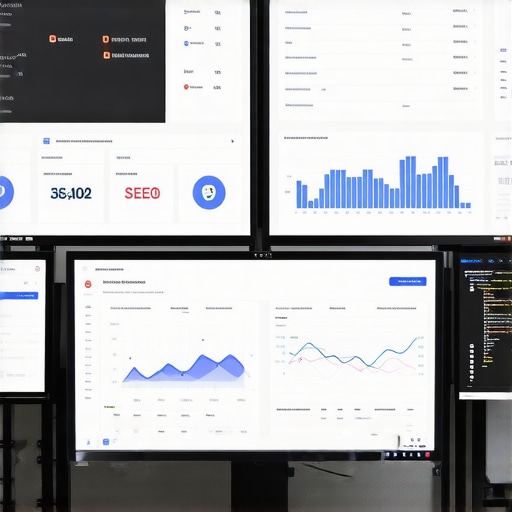
One of the biggest surprises I encountered was realizing that obsessing over technical SEO without aligning with user experience was a recipe for wasted effort. I once poured hours into perfecting meta tags, only to see minimal gains because the site felt cluttered and confusing to visitors. That taught me the importance of balancing behind-the-scenes optimization with intuitive design. Additionally, I learned that even with flawless ad copy, if your audience’s core pain points aren’t addressed, the clicks won’t convert. Personalization and empathy became my secret weapons—crafting messages that speak directly to their deepest desires is what truly makes campaigns click. Lastly, an eye-opening lesson was understanding that continuous testing beats all static strategies. Regularly experimenting with headlines, visuals, and offers—not just once but relentlessly—keeps your campaigns ahead of the curve and adapts perfectly to shifting trends.
My Arsenal for Success in PPC and Web Design
Over the years, I’ve relied on tools that deliver real results. Google Ads Editor is a game-changer for managing large budgets efficiently, providing granular control that boosts ROI. For SEO, Screaming Frog uncovers hidden crawl issues, ensuring your site remains visible to search engines. When it comes to web design, Figma allows rapid prototyping that helps me test layouts before launch, saving time and reducing bounce rates. For branding, I trust Canva Pro for creating cohesive visual assets that reinforce messaging across channels. Using these tools together creates a synergy that keeps my projects on the cutting edge and results-driven.
Fuel Your Passion: The Journey Continues
Remember, the world of PPC, web design, and technical SEO is constantly evolving. What works today may become obsolete tomorrow, but your willingness to learn and adapt is what truly counts. Dive into new strategies, test boldly, and don’t shy away from seeking feedback—growth happens outside your comfort zone. Your digital success story is waiting to be written, and every challenge is an opportunity to get better. So, take that next step with confidence, and watch as your campaigns and brands flourish. The future of digital marketing belongs to those who dare to push boundaries and innovate.
Comments are closed.