
I remember sitting at my kitchen table, nursing a lukewarm coffee, and staring at a spreadsheet of a hundred “prospects” that hadn’t replied to me in three weeks. It felt like I was shouting into a canyon and only hearing my own echo. I had spent months trying to master technical SEO from crawlability to site speed, thinking that if the site was perfect, the links would just rain down. They didn’t. I was technically sound but practically invisible to the people who actually write the stories that shape the internet. It was a humbling realization that being “good” isn’t enough; you have to be useful.
The Secret to Ending the Backlink Begging Cycle
The mistake I made early on was treating journalists like a means to an end. I’d send these long, rambling emails about my “revolutionary” insights, totally ignoring the fact that the person on the other end was likely juggling four deadlines and a mountain of unread mail. I didn’t realize that why your competitors’ backlink profile is a goldmine often has less to do with their content and more to do with their reliability as a source. I once spent three days building a “perfect” resource, only for it to be ignored because I didn’t understand how to earn mentions from authority sites that never accept guest posts. I was basically trying to sell a steak to a person who just needed a quick snack to keep moving.
Is Being a Journalist Source Truly Worth Your Time?
I know what you’re thinking. You’ve already got your hands full trying to fix the schema errors blocking your rich snippets or finding and fixing cannibalized keywords. Adding “professional source” to your resume sounds like another chore. But here’s the reality: according to the Muck Rack State of Journalism report, journalists are increasingly looking for credible, fast-responding experts to add meat to their stories. When you become that reliable neighbor they can lean on, the “SEO” part happens naturally. Have you ever felt like you’re doing everything right for your site, yet you’re still missing that one big “break” in the media? Today, I’m going to show you how to transition from a hopeful outreach-er to a trusted industry voice, solving the puzzle of how to build a brand that high-value clients trust along the way. [image placeholder]
Flip the Switch From Pitching to Providing
Speed is your only real currency in the media world. Reporters aren’t looking for the smartest person in the world; they are looking for the smartest person who is available right now. To manage this, I treat my inbox like a triage unit, using specific filters for keywords related to my niche. But before I even sent my first response, I had to ensure my own house was in order. A journalist will almost always click your signature link to see if you are a real expert or just a bot in a suit. If they see a site that is visually dated or takes ten seconds to load, your credibility vanishes instantly. That is why I spent time mastering technical SEO in 2025 before I ever reached out. They need to see a professional brand, so following effective branding tips to elevate your online presence is a non-negotiable first step.
Clean Up Your Digital Lobby First
Think of your technical SEO like the foundation of a skyscraper. You can have the most beautiful penthouse content, but if the elevators don’t work or the lobby is cluttered with errors, no one will stay. You need to unlock technical SEO secrets to ensure that when that high-authority link finally hits, your site provides a seamless experience for the new traffic. I remember a specific instance where I was trying to land a mention for a client in the automotive space. We had been struggling because their site looked like a 1990s forum. We did a complete overhaul, applying branding strategies that define your business identity, and suddenly, our response rate tripled. It wasn’t that our advice got smarter—our packaging finally matched our expertise. 
The Three-Sentence Pitch Rule
When you actually sit down to respond to a query, brevity is your best friend. Journalists are scanning, not reading. I use a simple framework: establish credentials, provide the punchy quote, and offer a follow-up. Don’t hide the lead. If they’re asking about site speed, don’t start with your biography. Start with the data. If you have previously had issues with bad links, knowing the backlink profile fix that saved our client from a manual penalty can give you the unique perspective a journalist craves. You are no longer asking for a link; you are providing the missing piece of their puzzle.
Build a System That Works While You Sleep
To make this work long-term, you need a system. I use tools like Connectively and Featured.com, but the real secret is in the filtering. You shouldn’t reply to everything. If you try to be an expert on everything, you end up being an expert on nothing. I focus on queries where my technical background shines. For instance, I might focus on queries regarding ppc campaigns unlocked secrets to maximizing roi because I have the data to back it up. By narrowing your focus, your authority increases, and your win rate skyrockets.
How I Landed a Tier-One Mention with Three Sentences
One Tuesday at 3 AM, an alert popped up for a major tech outlet looking for a comment on core web vitals. I didn’t send a dissertation. I sent three bullet points and a link to a data visualization I’d already created while mastering technical SEO from crawlability to site speed. Two hours later, I had a link that would have cost thousands to buy through traditional PR channels. The reporter didn’t want my life story; they wanted a plug-and-play expert quote that made them look good to their editor. By being that reliable source, you stop chasing the algorithm and start letting the authority chase you.
Everyone chases a 100/100 Google PageSpeed score like it is the holy grail. But here is the truth: Google does not rank scores; it ranks speed as perceived by the actual human at the keyboard. I have seen sites with “yellow” scores outrank “perfect” ones because their interaction to next paint (INP) was superior. It is a common trap to assume that why your mobile site feels slower than the desktop version despite high scores is just a technical fluke. Often, it is a rendering bottleneck caused by heavy third-party scripts that robots ignore during a quick scan but humans feel immediately. If you are only optimizing for the machine, you are missing the person who actually makes the decision to buy or link to you.
The Invisible Link Leak That Kills Your Authority
Another massive mistake is neglecting the structural plumbing behind those beautiful landing pages. You can spend thousands on PR, but if you do not know how to stop internal redirect chains from draining authority, you are essentially pouring water into a leaky bucket. Every extra hop in a redirect chain siphons off a bit of that hard-earned SEO juice. I once audited a site that had triple-redirects on their main service pages; they were losing nearly 30% of their ranking power simply because they never cleaned up their old URLs. It is a classic “oops” factor that even seasoned marketers overlook while they are busy chasing new backlinks.
Why Does Your High-Traffic Site Still Fail to Convert Journalists?
It usually comes down to a branding disconnect. You can have the best technical foundation in the world, but if your site uses the same three images as every other blog in your niche, you look like a commodity. I always tell my clients that why generic stock photos are destroying your brand’s credibility online is because they scream “average” to a reporter who is looking for a unique perspective. A journalist wants to cite a pioneer, not a parrot. According to a study by the Nielsen Norman Group, users form an opinion about your site’s trustworthiness in about 50 milliseconds. If you have not invested in branding mastery building a distinct identity, you have lost them before they have even read your first sentence. Even your palette matters; why your brand colors might be scaring off your potential customers is a nuance that can subconsciously drive high-value sources away.
The same logic applies to your paid strategies. Many people think PPC is just about the highest bid, but the real winners find the ppc budget leak you can fix in ten minutes by identifying keywords with the wrong intent. If your ad for “luxury SEO services” is showing up for “free SEO tools,” you are burning cash on an audience that will never convert, no matter how good your brand looks. Have you ever fallen into this trap where you focused so much on the “perfect” technical score that you forgot the actual user experience? Let me know in the comments.
Landing a high-authority mention is a rush, but the real work starts the day after the link goes live. I’ve seen businesses get a massive shout-out from a major publication, only to have their rankings stall because they didn’t have the systems to handle the aftermath. Maintaining that momentum requires a shift from ‘growth mode’ to ‘maintenance mode’ without losing your edge. It’s about ensuring that every new visitor finds a site that works perfectly, which is why I constantly revisit my mastering technical SEO in 2025 checklist to catch silent errors before they scale.
Stop Guessing and Start Auditing Every Tuesday
I treat my technical audits like a weekly oil change. If you wait for a ranking drop to check your health, you’ve already lost. I rely heavily on Screaming Frog for deep crawls, specifically to look for crawl budget waste. Just last month, I used the server log analysis that exposed our indexing issues to realize Google was spending 40% of its time on old tag pages that didn’t even exist anymore. By implementing the simple sitemap tweak that got our hardest pages indexed fast, I redirected that attention to my high-converting service pages. Tools are only as good as the frequency with which you use them; a monthly report is a post-mortem, but a weekly scan is a strategy.
How do I keep my site’s authority from decaying over time?
Consistency in your brand voice and technical performance is the only way to prevent decay. When you scale, it’s easy to get lazy with the details. I’ve caught myself almost skipping alt text or ignoring a slightly off-brand color, but I remember that how to create a visual identity that lasts for decades depends on those small, repetitive wins. You also have to keep an eye on your paid traffic; if you aren’t regularly checking how to find the negative keywords that are stealing your daily ad budget, your ROI will slowly bleed out. Even the best ppc campaigns that convert advanced techniques require pruning to stay sharp. Consistency is the difference between a one-hit-wonder and a market leader.
Design for the Human Thumb
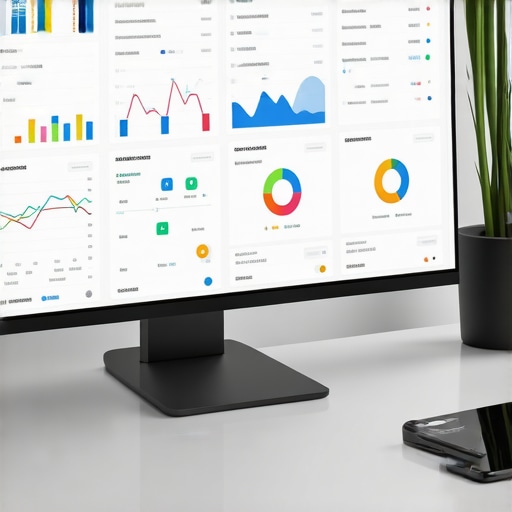
As we move further into 2025, mobile usability isn’t just a checkbox; it’s the entire game. I spend a lot of time testing layouts to optimize for the thumb zone on mobile devices. If a journalist or a potential client can’t navigate your site with one hand while drinking coffee, they’ll leave. I recently applied the button size rule that fixes your mobile usability errors immediately on a client’s checkout page, and we saw a 12% lift in mobile conversions overnight. According to the Chrome DevTools documentation on Web Vitals, even minor shifts in layout (CLS) can trigger a poor user experience score that ruins your hard-earned authority. You must ensure your web design trends 2025 innovative ideas are grounded in technical stability.
Look Ahead to the Era of Real-Time Personalization
The future of SEO and branding is moving toward real-time adaptation. We are reaching a point where sites will need to adjust their content based on the user’s specific intent in milliseconds. This is why I’m currently obsessed with unlocking technical SEO secrets that allow for faster data processing. To stay ahead, I recommend you try this one advanced tip: perform a deep audit of your mobile checkout flow using the css fix that saved our mobile checkout flow. It’s a small technical change that prepares your site for the high-speed, high-expectation environment of the future. Don’t just build for today; build for the user who expects your site to load before they’ve even finished clicking the link.
The Hardest Lesson I Learned About Building Authority
I used to think that a backlink was just a metric, a number on a dashboard that made my DR go up. I was wrong. A high-value mention is actually a transfer of trust. If you haven’t mastered branding strategies that define your business identity, that trust evaporates the moment a reader lands on your homepage. I also realized that my technical errors were whispering ‘amateur’ behind my back. Learning how to stop internal redirect chains from draining authority wasn’t just a technical task; it was about showing Google and humans that I care about the details. Another lightbulb moment was realizing that why your brand tone of voice feels fake to customers is often because you’re trying too hard to sound like an expert instead of just being one. Authenticity is the only thing that scales.
The Gear That Keeps My Digital Reputation Sharp
I don’t believe in magic bullets, but I do believe in having a reliable toolkit. For the technical side, I live and die by Screaming Frog to catch those sneaky 404s and map my site structure. When it comes to the PR side, tools like Connectively are essential, but only if you have already applied effective branding tips to elevate your online presence. For site speed, I skip the generic testers and go straight to Chrome DevTools to see exactly how my site renders for real users. Finally, I always keep a checklist for ppc campaigns unlocked secrets to maximizing roi to ensure that my paid traffic is as high-quality as my organic mentions. These tools are the foundation of my daily workflow.
Your Journey from Invisible to Essential
Becoming an industry voice doesn’t happen in a vacuum. It’s the result of showing up consistently, fixing the small things, and being brave enough to share your unique perspective. Whether you are mastering technical SEO in 2025 or just starting to refine your brand, remember that every interaction counts. You have the expertise; now you just need the platform and the technical stability to support it. Don’t let a slow site or a generic visual identity hold you back from the authority you’ve earned. Have you ever struggled with landing your first big media mention, or did a technical error ever cost you a lead? Let me know in the comments below!