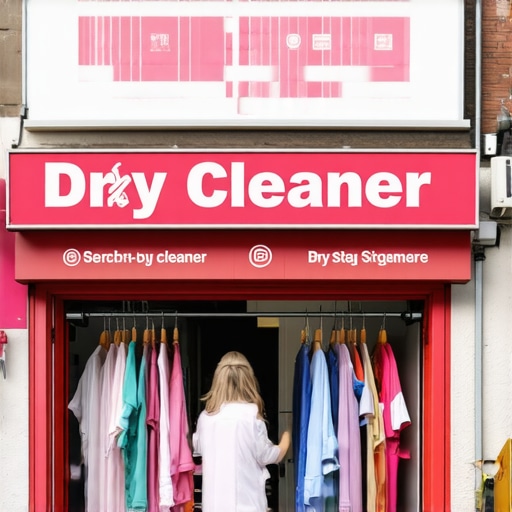
How Local Dry Cleaners Can Actually Win the Battle for “Near Me” Searches
The dry cleaning industry has undergone a seismic shift over the last two decades. Twenty-five years ago, when I first started consulting for plant owners and retail operators, a business survived on three things: a high-traffic physical location, a recognizable sign, and steady word-of-mouth. If you pressed a crisp collar and removed a red wine stain from a silk blouse, the neighborhood knew about it. Today, while quality remains the foundation of retention, the discovery process has moved entirely to the palm of the customer’s hand. In the modern marketplace, dry cleaning near me is the most powerful phrase in your customer’s vocabulary. It is the primary driver for ready-to-buy customers in the local community, and if your business doesn’t appear at the exact moment that search is performed, you are effectively invisible, regardless of how long you’ve been on the corner.
As a consultant with over 25 years in the dry cleaning and laundry industry, I have watched legacy businesses shutter because they relied on “the way we’ve always done it.” Meanwhile, I’ve seen small, single-plant operations explode in growth by capturing the digital “near me” intent. This guide is designed to move beyond the fluff and provide a high-authority roadmap for dominating your local search market.
The “Near Me” Reality: Why Local SEO is Your New Storefront
Many dry cleaners confuse general SEO with Local SEO. General SEO is about ranking for broad terms globally; Local SEO is about being the answer to a specific geographic need. For a dry cleaner, proximity is the ultimate conversion factor. A customer in Dallas isn’t looking for the best cleaner in the world; they are looking for the best dry cleaning near me that they can visit on their way to the office.
Local SEO is uniquely dependent on proximity, relevance, and prominence. Google’s algorithm for local search prioritizes businesses that are physically close to the searcher, but proximity alone isn’t enough. You must prove to Google that you are the most relevant and trusted option in that radius. This is where the secret to ranking for competitive local keywords comes into play. It’s not just about having the keyword on your site; it’s about creating a digital footprint that mirrors your physical presence.
Think of your website and your Google Business Profile as your “digital storefront.” In the past, you would sweep the sidewalk and polish the windows to attract walk-ins. Today, you optimize your metadata and manage your citations. If you want to see a prime example of a business that understands its local positioning, look at how dry cleaning near me is targeted through localized service pages. They aren’t just waiting for people to drive by; they are meeting them in the search results.
Mastering the Google Business Profile (The Three-Pack Strategy)
If you only do one thing for your digital marketing this year, it should be the absolute mastery of your Google Business Profile (GBP). The “Local Three-Pack” – the three businesses that appear on the map at the top of a Google search – is where the vast majority of clicks happen. If you aren’t in those top three spots, you are fighting for the scraps left behind.
The first step is claiming and verifying your listing. This sounds basic, but many owners have unverified listings or, worse, multiple duplicate listings that confuse Google’s crawlers. Your NAP (Name, Address, Phone) data must be 100% consistent across the entire web. If your sign says “Main Street Cleaners” but your Yelp profile says “Main St. Dry Cleaning,” Google may view these as two different, less-authoritative entities. This is a common reason why your local citations must be identical everywhere.
Beyond the basics, you must treat your GBP as a social media feed. High-quality images of your facility are non-negotiable. Don’t just post a photo of the front door. Show your state-of-the-art tensioning equipment, your spotless laundry shop near me interior, and your staff in uniform. Transparency builds trust. I have seen a single local SEO strategy, centered around GBP optimization and image updates, add $240,000 to a cleaning business’s annual revenue simply by moving them from the 7th position to the 2nd in the map pack. If you find your rankings slipping, you need to understand why your local business doesn’t appear in the map pack anymore and address the technical debt immediately.
Don’t forget to utilize the “Products” and “Services” tabs within your GBP. List everything: wedding dress preservation, leather cleaning, and wash-and-fold. Each of these acts as a signal to Google that you are a comprehensive solution for local garment care.
On-Page Optimization: Beyond Just Keywords
While the Google Business Profile handles the map, your website handles the “why.” Your website needs to be more than a digital brochure; it needs to be a conversion engine optimized for local relevance. One of the biggest mistakes I see is a dry cleaner having a single “Home” page and a “Contact” page. To win the “near me” battle, you need location-specific content.
If you serve multiple neighborhoods, create dedicated landing pages for each. For instance, if you are targeting customers looking for dry cleaning lovers lane, you should have a page specifically optimized for that neighborhood. This page shouldn’t just repeat keywords; it should mention local landmarks, nearby businesses, and specific delivery routes in that area. This tells Google that you aren’t just a business in the city; you are a business *of* the neighborhood.
Furthermore, your service pages need to be granular. Instead of a generic “Services” page, create individual pages for shirt laundering and specialty garment care. This allows you to rank for “long-tail” keywords. A customer might not just search for a dry cleaner; they might search for “where to get a tuxedo cleaned near me” or “best shirt laundry service.” By having dedicated pages, you become the most relevant answer to those specific queries. Remember, keywords in the URL are no longer the primary ranking factor they once were – focus on the quality of the content and the user experience on the page.
The Reputation Engine: Reviews and Trust Signals
In the dry cleaning business, trust is everything. You are asking customers to hand over their most expensive and sentimental possessions. Online reviews are the digital equivalent of a neighbor’s recommendation. A high volume of five-star reviews is the strongest signal you can send to both Google and potential customers.
The key to getting more five-star reviews is to make it easy. Don’t wait for the customer to remember to leave a review; ask them at the point of peak satisfaction – usually right when they receive a text notification that their order is ready or at the point of pickup. Use QR codes on your counter cards or automated email follow-ups. However, you must be careful to follow the platform’s guidelines. Learn how to get more five-star reviews without breaking Google’s rules to avoid being penalized or having your reviews ghosted.
Equally important is how you handle the inevitable negative review. In 25 years, I’ve never seen a perfect business. A negative review isn’t a death sentence; it’s an opportunity. Responding professionally, taking responsibility, and offering a resolution shows potential customers that you stand behind your work. This transparency actually builds more trust than a profile with 500 “perfect” reviews and no owner interaction. Knowing how to turn a negative review into a brand-building opportunity is a vital skill for any modern owner.
Technical SEO: Speed and Mobile-First Design
The majority of “near me” searches occur on a mobile device while the user is on the go. If your website takes more than three seconds to load on a 4G connection, you’ve lost the customer before they even saw your logo. Google has moved to mobile-first indexing, meaning it judges your entire site based on its mobile performance.
You must adhere to the “thumb-zone rule.” This means all critical elements – your phone number, your “Request a Pickup” button, and your map directions – should be easily reachable with a user’s thumb while holding their phone with one hand. We discuss this in detail in our guide on the thumb-zone rule for better mobile conversions and happier users. If your site is cluttered or requires “pinch-to-zoom,” your bounce rate will skyrocket, and your rankings will plummet.
Technical speed is also a ranking factor. Large, unoptimized images of your dry cleaning plant can slow down your site significantly. While high-quality visuals are important, they must be compressed and delivered via a fast server. In the local space, why your website load speed is more important than your visuals is a reality you can’t ignore. A fast, ugly site will often outrank a slow, beautiful one.
Integrating PPC and Branding for Total Dominance
While organic Local SEO is a long-term play, Pay-Per-Click (PPC) advertising, specifically Google Local Services Ads (LSAs), can provide immediate visibility. LSAs appear at the very top of the search results, even above the traditional ads and the map pack. For a professional laundry service, these ads are gold because you only pay for actual leads (calls or messages), not just clicks.
However, advertising only works if you have a strong brand identity to back it up. If your ad brings a customer to a website that looks like it was built in 1998, they will leave. Your digital presence must reflect the quality of your physical work. Consistent branding – from your van wraps to your poly-film bags to your website’s color palette – creates a professional image that justifies premium pricing. Explore Branding Strategies That Define Your Business Identity to ensure your digital and physical worlds are in sync.
By combining a dominant organic presence in the “near me” searches with targeted PPC, you create a “surround sound” effect. When a customer sees your business in the ads, in the map pack, and in the organic results, you become the only logical choice in their mind.
Conclusion: Your 30-Day Local SEO Roadmap
Winning the battle for dry cleaning near me searches doesn’t happen overnight, but you can see significant movement in 30 days by following these steps:
- Week 1: Audit your Google Business Profile. Ensure your NAP is consistent and upload 10 new high-resolution photos of your plant and staff.
- Week 2: Fix your technical debt. Check your mobile load speed and ensure your “Click-to-Call” buttons are working perfectly.
- Week 3: Build your neighborhood pages. Create content specifically for the areas you serve, like Lovers Lane or other local hubs.
- Week 4: Launch a review campaign. Reach out to your top 50 loyal customers and ask for an honest Google review.
The industry is more competitive than ever, but for those willing to master the digital storefront, the opportunities for growth are massive. If you’re ready to take your dry cleaning business to the next level and dominate your local market, Contact Us at Growth Digital Co for a comprehensive technical audit and strategy session.